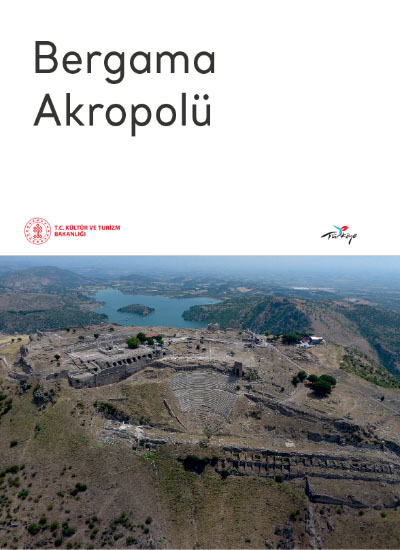
PERGAMON AKROPOLÜ
2014 yılında Dünya Kültür Miras Listesine giren Bergama, tarihi boyunca işgallere ve yıkımlara maruz kalmasına rağmen, stratejik bir noktada yer alması nedeniyle sürekli iskan edilmiş ve tarih sahnesinden hiçbir zaman kaybolmayan yerleşimlerdendir.
Pergamon antik kentinin kurulduğu Bakırçay havzasında, prehistorik dönemlere kadar uzanan yerleşim izleri, Pergamon’un kurulduğu tepe’de M.Ö 7.-6.ve 5.yy. işaret eder. “kale” veya “müstahkem mevkii” anlamına gelen “Perg” veya Berg” Pergamon adını oluşturur.
M.Ö 283 yıllarında Philetairos krallığını kurar ve 150 yıllık siyasi, ekonomi ve kültürel yönden bölgesinde güçlü bir krallık olarak varlığını sürdürür.
Pergamon’un krallarından III.Attalos’un vasiyeti üzerine Roma hakimiyetine geçen kent (M.Ö 133), Asya eyaletinin başkenti olur. M.Ö 3.yy.dan itibaren Roma İmparatorluğu’nun güç kaybetmeye başlaması ve ikiye ayrılma süreci ile birlikte Bergama yeni bir dinin –Hıristiyanlık- etkisinde şekillenmeye başlamıştır. M.S 8.yylarda Bergama Arap akınlarına maruz kalır, 14.yy.başlarında ise Menteşe Beyliği topraklarına katılır. 1345 yıllarında ise Orhan Gazi tarafından Osmanlı topraklarına dahil olur ve kentte Türk dönemi başlar.
MÖ 1. Yüzyılda yaşamış yazar ve filozof Pilinius Secundus’un “Küçük Asyanın en ünlü ve muhterem şehri” olarak tanımladığı Pergamon antik kenti, dik bir tepe üzerinde zorlu topografik zorluğa rağmen başarılı şehircilik planlaması ile antik dönemde önemli bir yerleşim yeri haline gelir. Teraslama yöntemi ile açılan geniş alanlara büyük kutsal alanlar, kamusal yapılar, sosyal yapılar ile konutlar yerleştirilmiştir. Peristylli düzendeki avlulu yapıları ile örnek mimari gelişimini ortaya koymuştur.
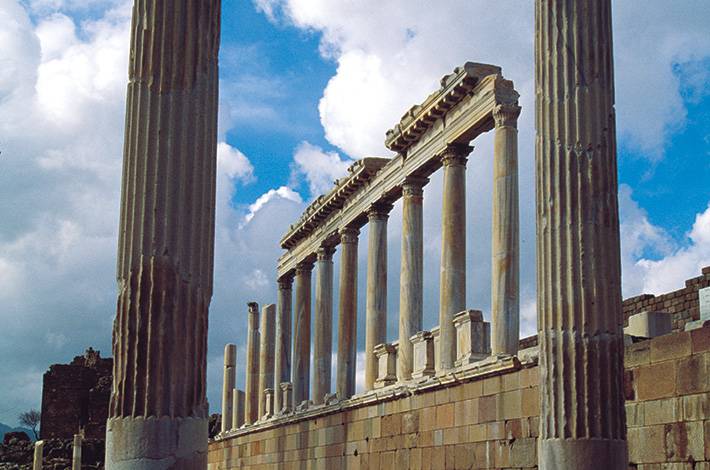
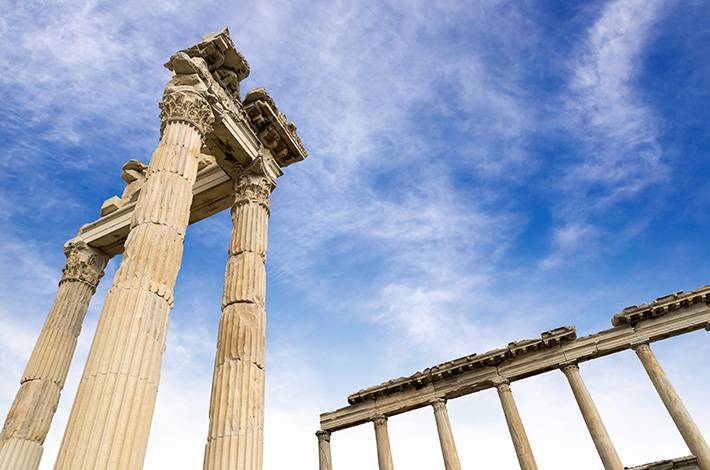
Pergamon kent planı; yukarı ve aşağı kent olarak ikiye ayrılır. Yukarı şehirde kralların peristylli planlı, zengin süslemeli sarayları, M.Ö 4.yy ait ve dor mimarisini yansıtan Athena Tapınağı, Roma İmparatoru Traian ve Hadrian’ın kolossal heykelleri, mimari detayları ile dikkat çeken Traian Tapınağı, Pergamonluların keşfi Bergama kağıdı (Pergaminae Chartae) olan yeni yazma aracı ile yazılan raflarında rulo ya da her iki yüzü yazılı kitap şeklinde (codex) muhafaza edilen 200 bin ciltlik esere sahip Pergamon kütüphanesi antik dünyanın en önemli kütüphanesiydi.
II.Eumenes zamanında Pergamonluların Magnesia’da Galatlara ve Seleukoslulara karşı kazandığı kesin zafer (M.Ö 180) sonucu inşa edilen ve kent mimari programın en dikkat çekici eseri Zeus Sunağıdır.sunak dış yüzünde bulunan Zeus ve Athena adına adanan sunak Pergamon Heykelcilik okulunun en önemli eseridir. Zeus ve Athena kabartma gurubu, ışık tanrıları Apollon, Artemis ve Leto grubu Helios, kız kardeşi şafak kızılı Eos, ay tanrıçası Selena, Nyx, kavga tanrıçası Eris, kader dağıtan Moiralalar, yıldız tanrı Orion grubu Poseidon, Amphitrite, Nereus,Doris Okeanus,Tethys, grubu kabartmaları yüksek plastik özellikleri ile antik dünyanın en önemli eseri arasında yer alır.
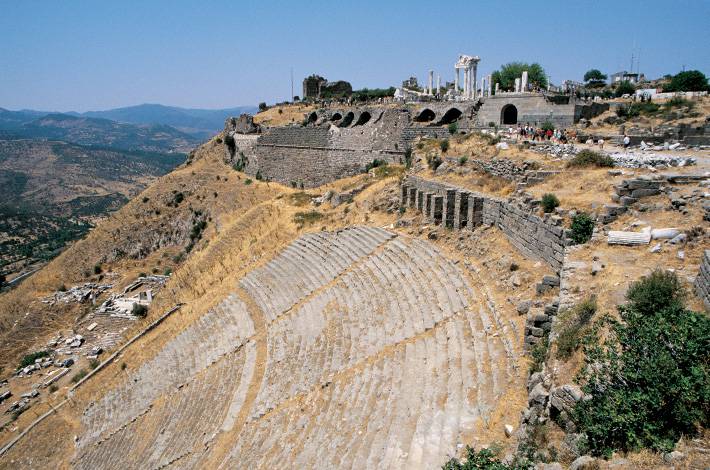
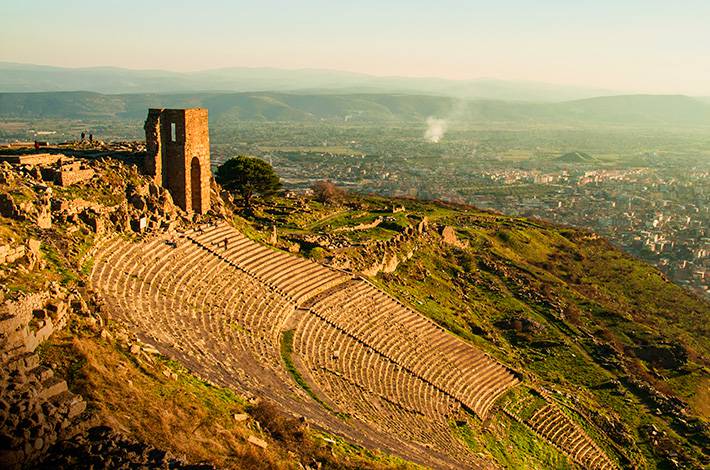
10.000 kişilik tiyatrosu dik yamaca konumlanan yapısı ile seyyar sahne binası Dionysos Tapınağı ile mimari bağı ile antik önemli en ünlü tiyatroları arasında yer alır. 11. Pergamon kale tepesine su temini için Helenistik dönemde 45 km uzunluğunda, 240 bin toprak künkten oluşan ve 900 m yükseklikte Madra Dağı’ndan gelen yüksek basınçlı su hattı Pergamonluların bir mimari başarısıdır.
Aşağı kentte ise Hera ve Demeter kutsal alanları, Helenistik dönemin bilinen en büyük gymnasıonu, aşağı agora, evler,dükkanlar gibi daha çok sosyal yapılar bulunmaktaydı.
Kent, artan nüfus ile II.Eumenes (M.Ö 197-1599) zamanında 4 km.ye varan şehir surları dışına doğru aşağıya tepenin eteklerine oradan da Bakırçay Ovası’na doğru genişleme gösterir. Kızıl Avlu (Bazilika) ve Asklepion kutsal alanı bu genişlemenin en önemli yapıları arasındadır.